Industry
Robotics Education + Medical Hardware
NYC FIRST STEM Center
Robotics instruction and medical crash-cart hardware.
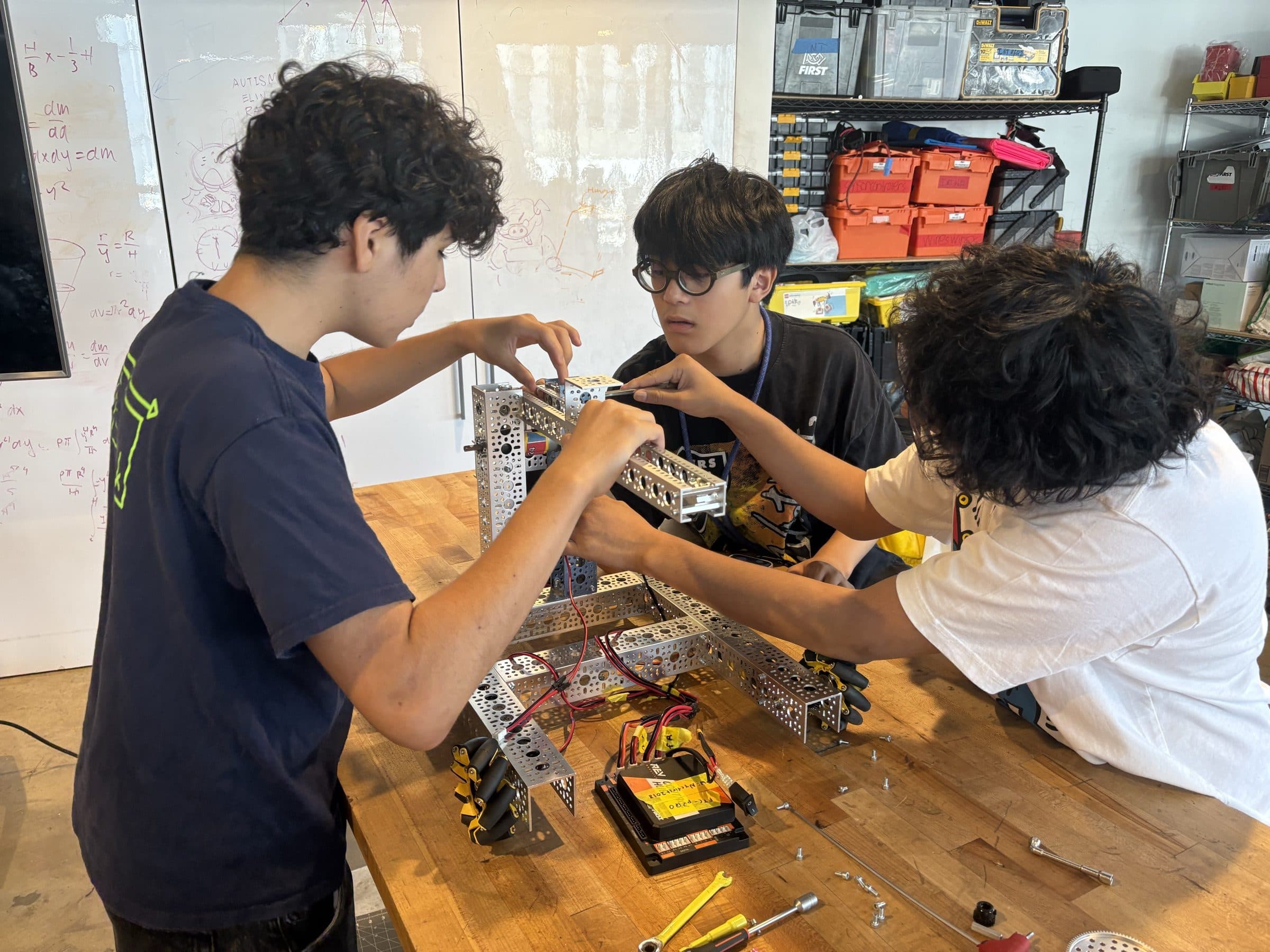
Led robotics programming instruction for students and educators at the NYC FIRST STEM Center. Designed hardware schematics for the mmWave sensing and LED guidance electronics on a medical crash-cart system developed with Cornell Tech's AIRLab.
- Role
- Engineer Intern
- When
- Jul 2025 – Aug 2025
- Where
- New York, NY
- Built with
- Technical CommunicationProblem SolvingCurriculum DevelopmentDebugging CodeElectronic Circuit DesignSoldering
Robotics programming instruction
Teaching robot programming.
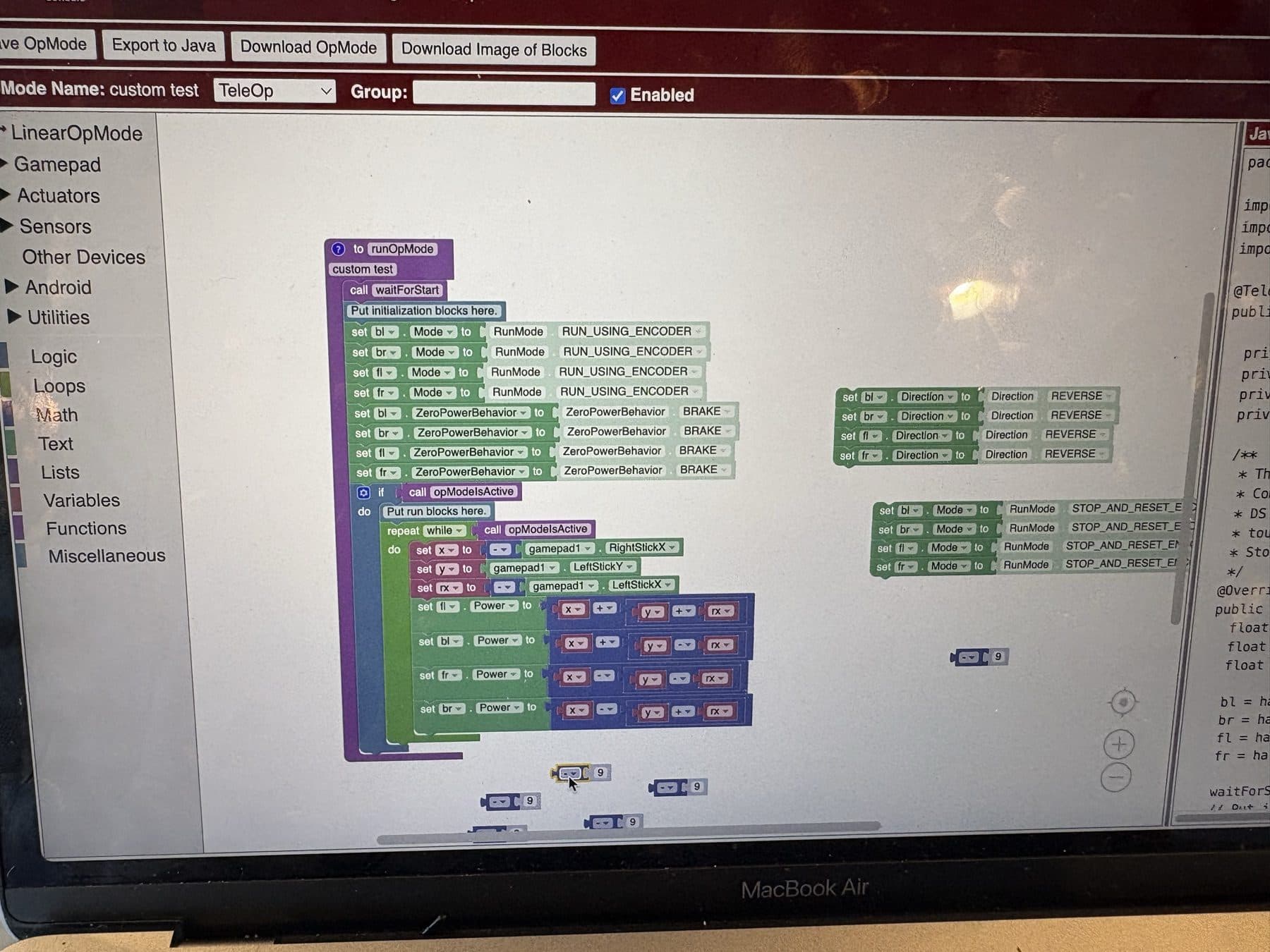
Led hands-on programming workshops that took 40 students and 20 educators from middle and high schools across the city to competition robots running teleoperated control and autonomous routines. Lessons covered block-based programming for drivetrains, servo-actuated mechanisms, autonomous routines, and encoder + PID feedback control.
Hardware · Cornell Tech AIRLab
A crash cart that guides you to what you need.
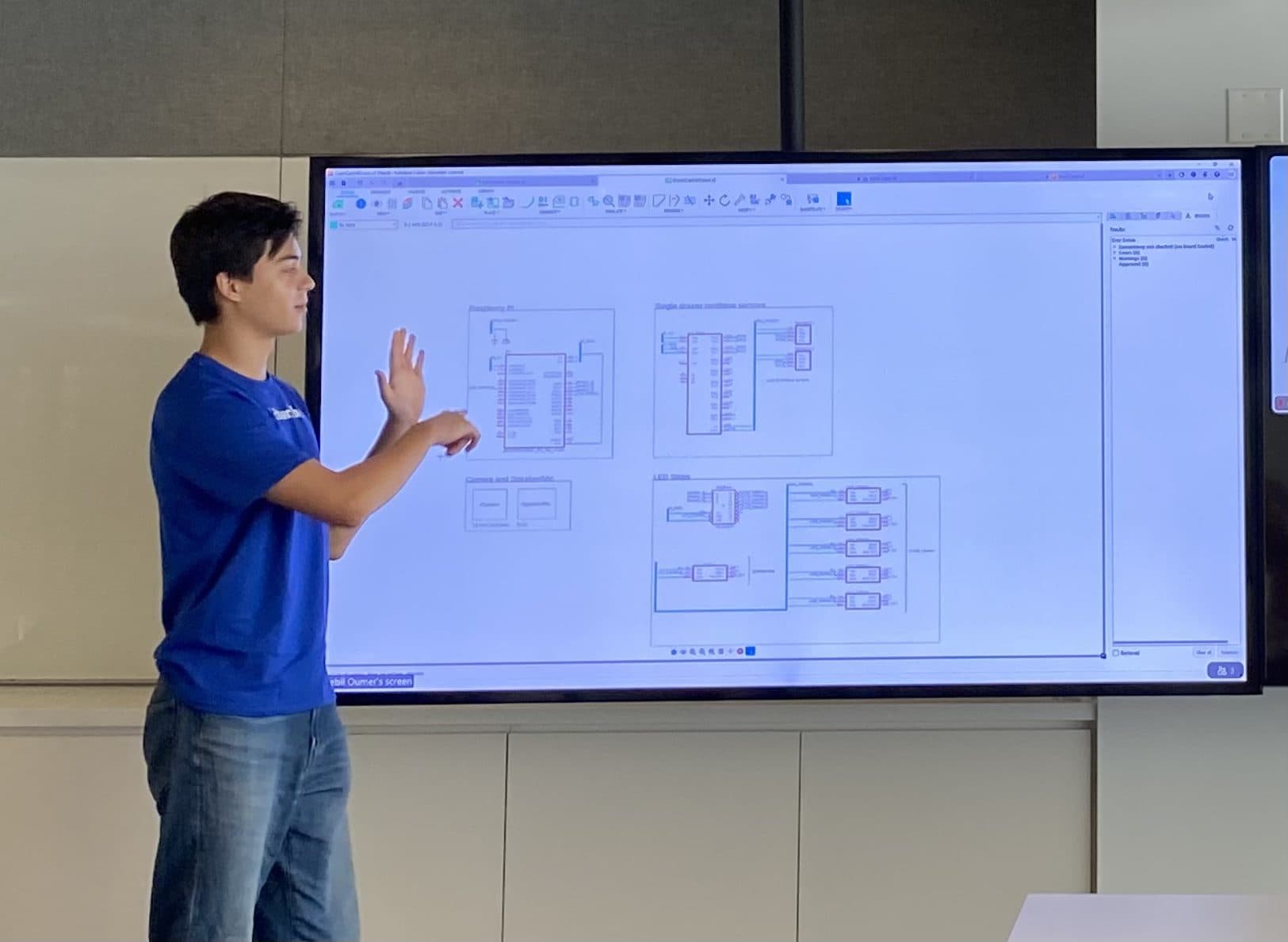
Designed the hardware schematics for the mmWave sensing and LED guidance electronics on a medical crash-cart system developed with Cornell Tech's AIRLab. A Raspberry Pi ties together mmWave sensors on the drawers, LED strips, and a camera with a speaker and mic, so the cart can detect when tools are taken and visually guide medical personnel.
Next
Infusinator
Medication logging, at the moment of use.