Project
Wearable Smart Tourniquet + iOS Companion App
Infusinator™
Patent PendingMedication logging, at the moment of use.
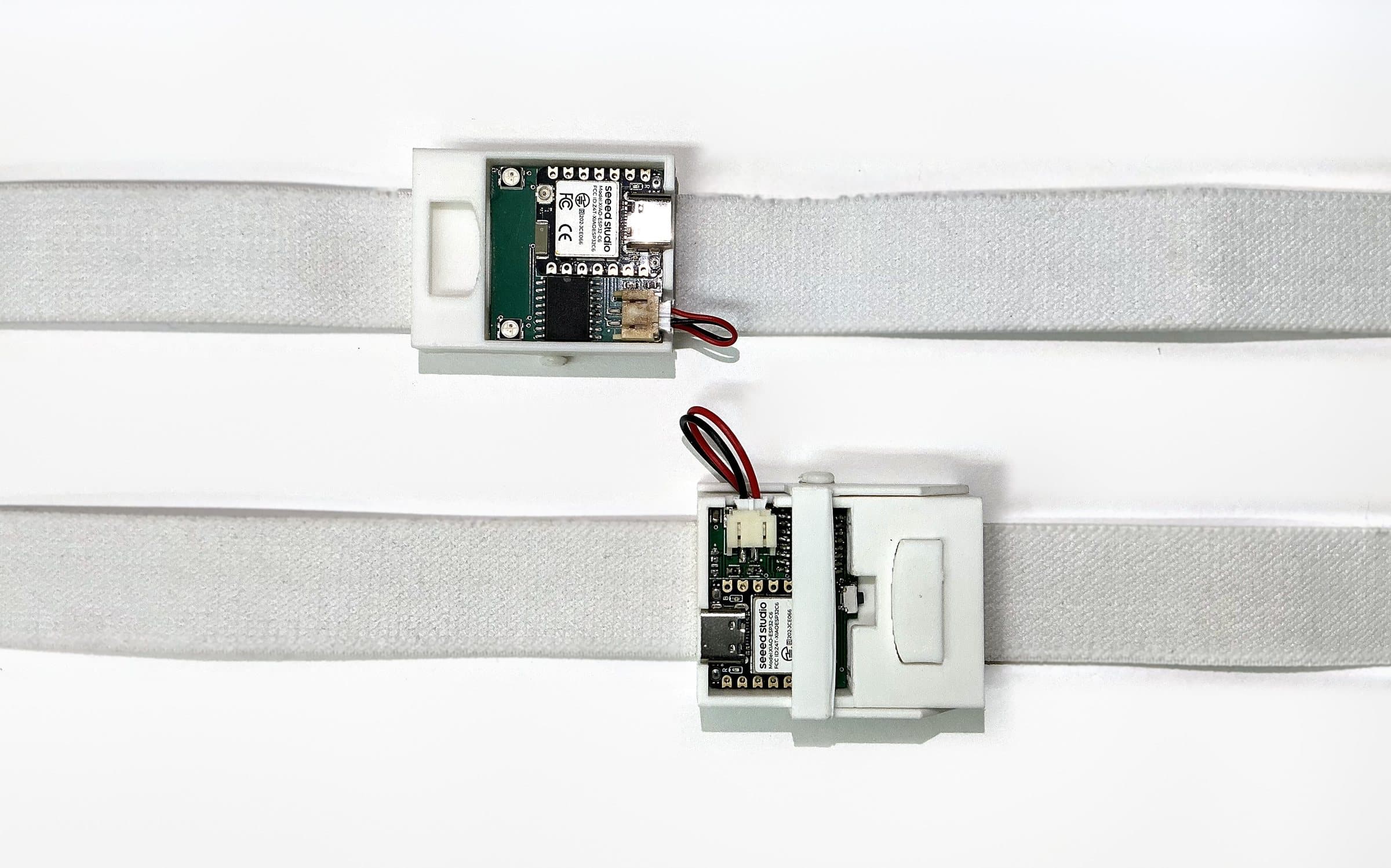
A patent-pending smart tourniquet and companion iOS app for people on intravenous self-infusion therapies, so medication logging happens automatically, at the moment of use.
- Role
- Inventor
- Status
- Patent Pending
- Built with
- C++FreeRTOSESP32-C6Hall-effect SensingAltium DesignerBLE / Wi-FiFusion 360SwiftUIPython
The problem
Treatment logs depend on memory.
People on intravenous self-infusion therapies need an accurate treatment log for consistent dosing and informed clinical decisions. User research with 20 bleeding-disorder patients pointed to the same issue: paper logs and apps
- require manual entry
- are easy to forget or skip
- are hard to keep up consistently
The idea
Let the tourniquet do the logging.
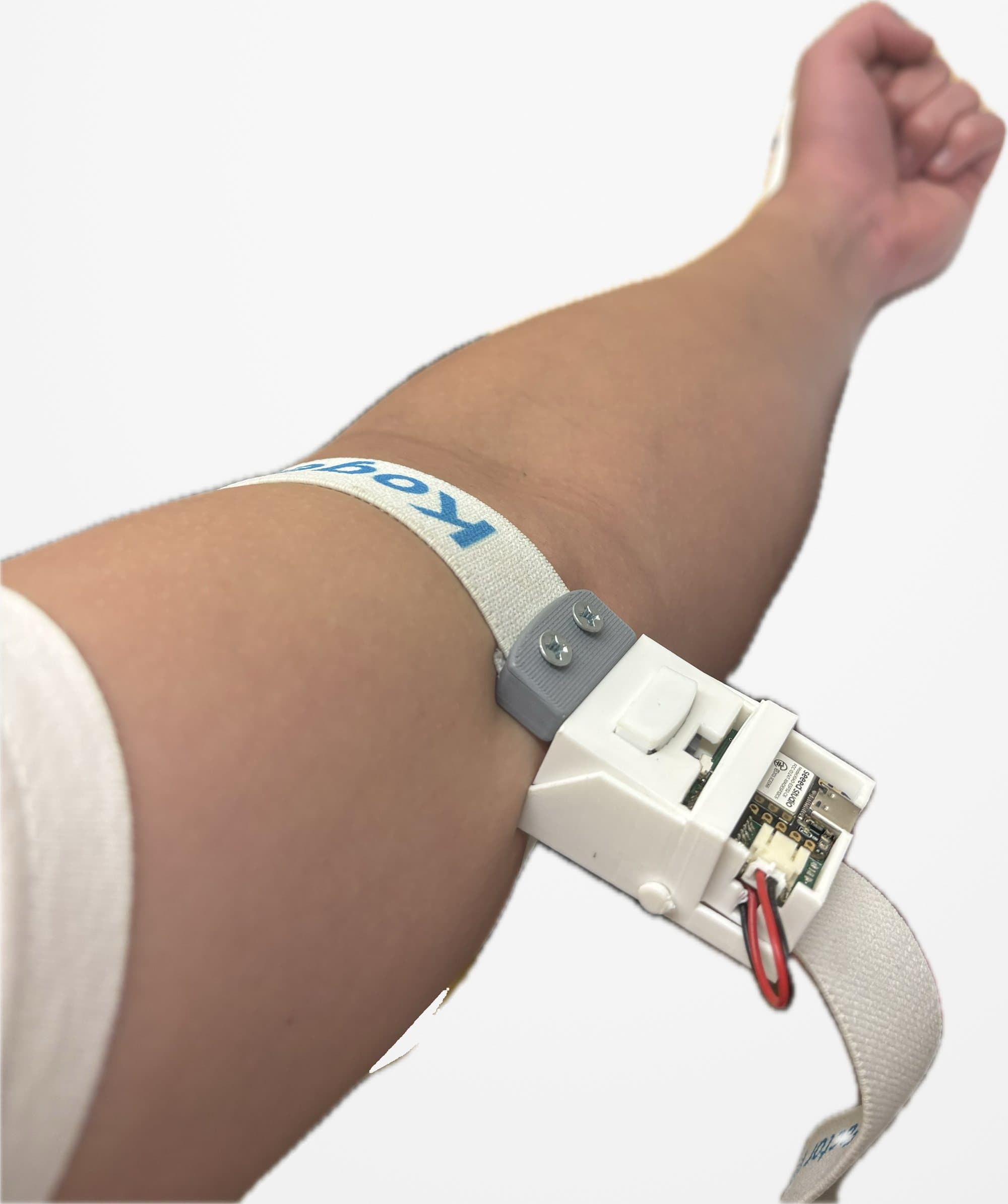
The tourniquet goes on for every infusion. Make it smart, and each use is detected and logged automatically, with nothing to remember or type.
How it works
From the arm to the record.
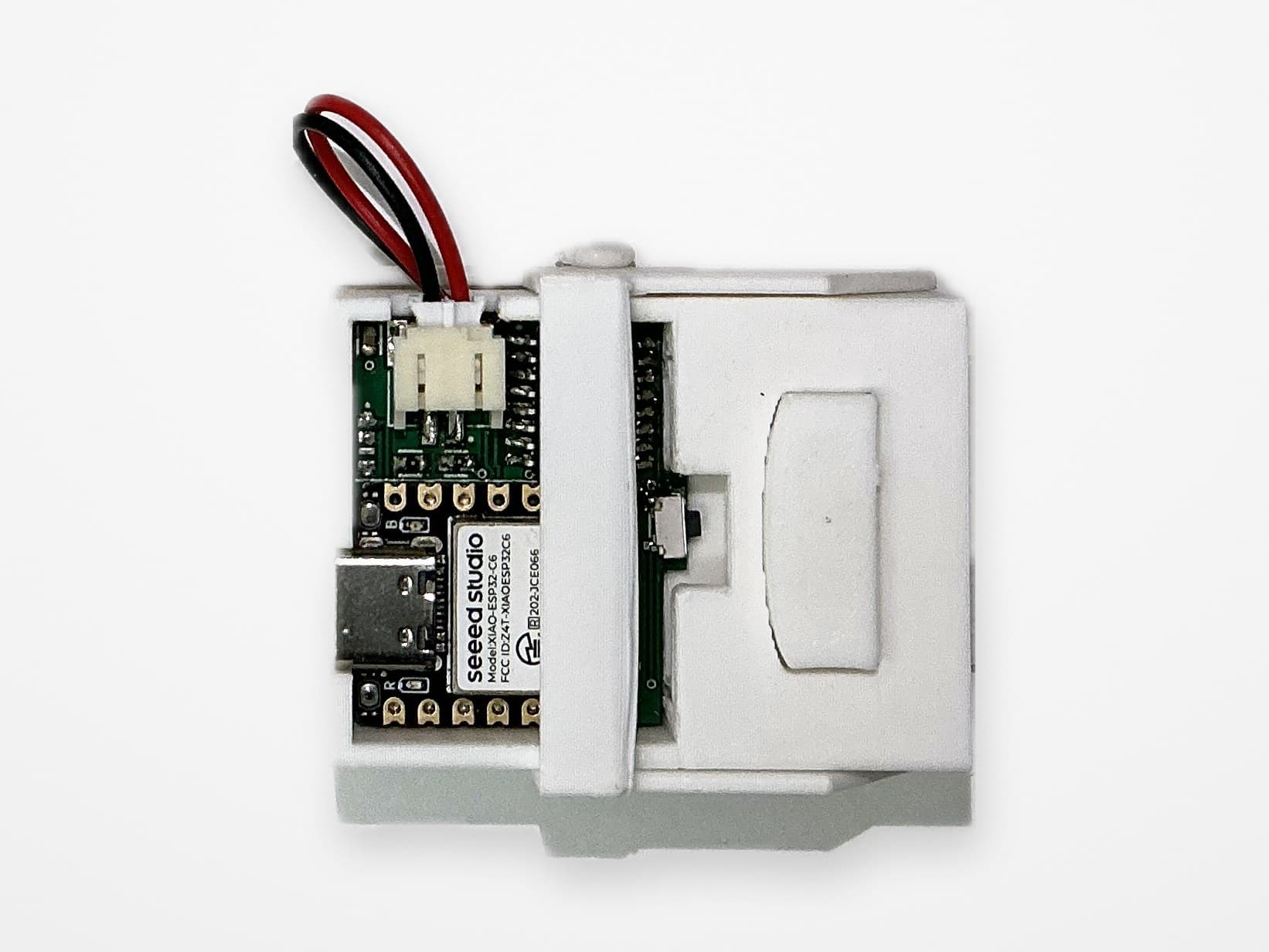
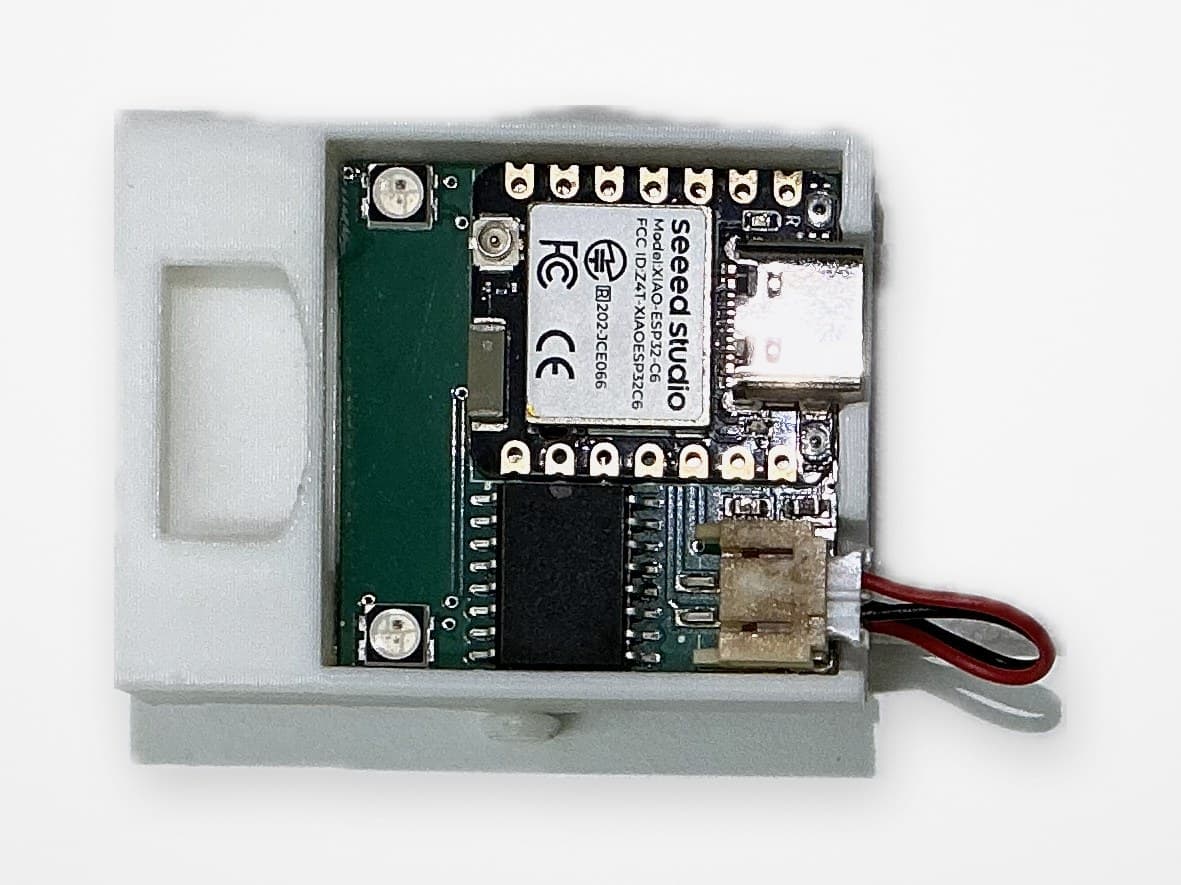
A custom low-power ESP32-C6 PCB running FreeRTOS firmware detects each clip and unclip, timestamps it with an RTC, and syncs it over Wi-Fi to a backend API and database. The iOS app picks it up from there.
The app
Every infusion, already logged.
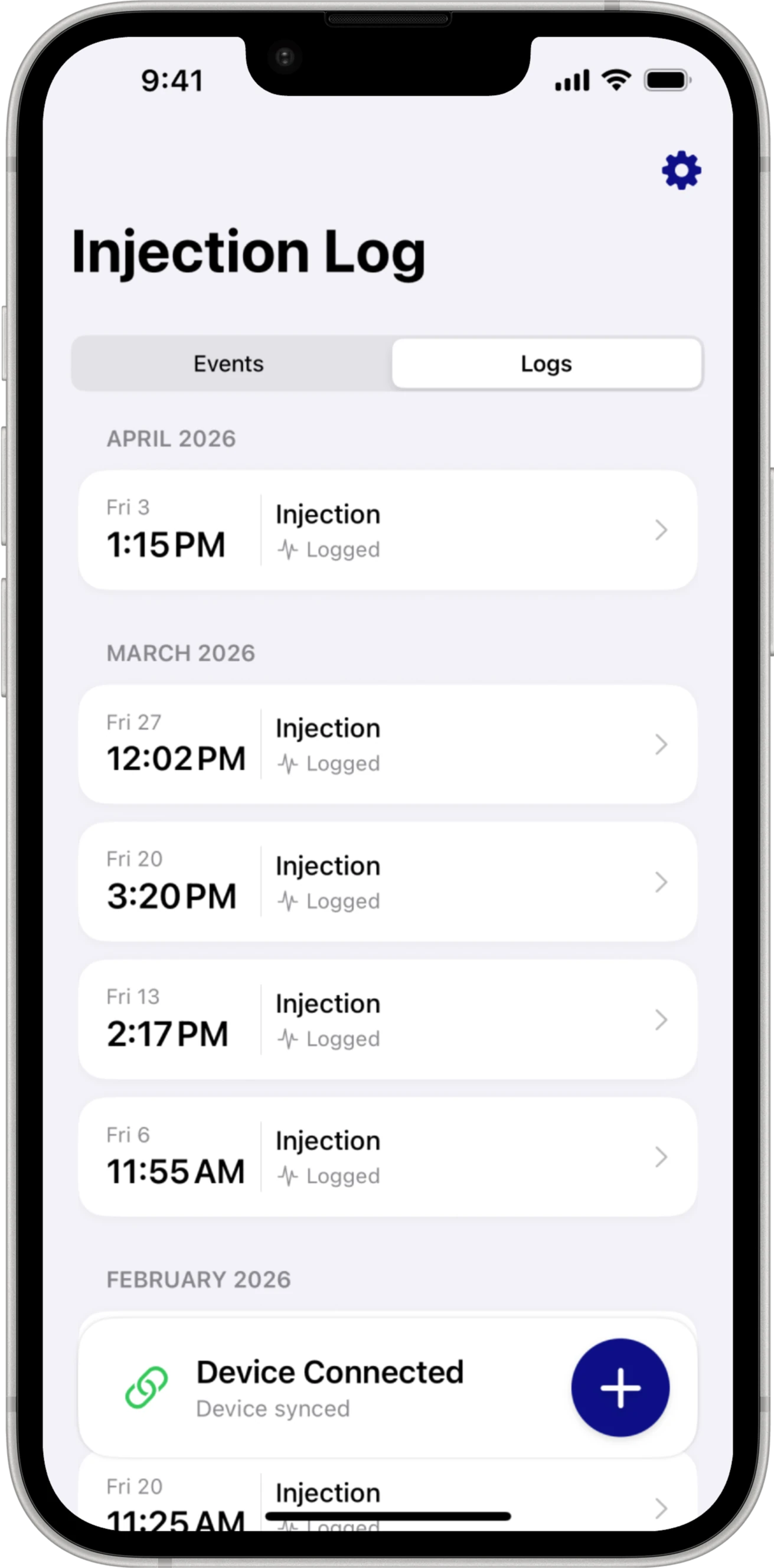
Each event arrives as a real-time push notification. One tap confirms it, and it joins a timestamped history patients and clinicians can review and edit.
Prototype 1 → 2
A Hall sensor instead of a button.
Prototype 1 detected the clip with a mechanical button, which missed events whenever mechanical tolerances shifted the fit. Prototype 2 swaps it for a Hall-effect sensor that detects clip and unclip reliably. Other upgrades:
- Deep-sleep power optimization
- Wi-Fi log syncing in firmware
- Three device status LEDs
- A re-engineered lever and slimmer body
- A new backend with user accounts and authentication
Security
The device can write, but never read.
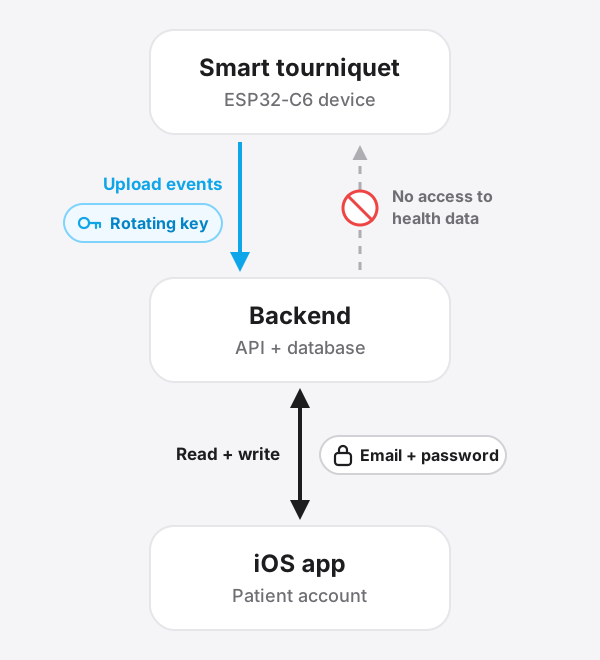
Patients sign in to the app with email and password. The tourniquet authenticates with its own rotating secret key, and that key only permits uploading events. It can't retrieve anyone's health data, so a lost or tampered-with device can't expose patient records.
Validation
Tested from the clip to the cloud.
Prototype 2 was tested at every layer. Next up: broader user testing and refining the device design.
Clip detection
Hall triggering across mechanical tolerances
Connection recovery
Recovers from dropped Wi‑Fi and backend links
Push notifications
Real-time delivery to the iOS app
Durability
Drop testing and strength under arm tension
Next
Rubik's Cube Solver
A stepper-and-servo robot that turns a 2×2 cube.