Research
Marine Robotics Laboratory
Infrared Robot Swarm Localization
Infrared localization for autonomous boat swarms.
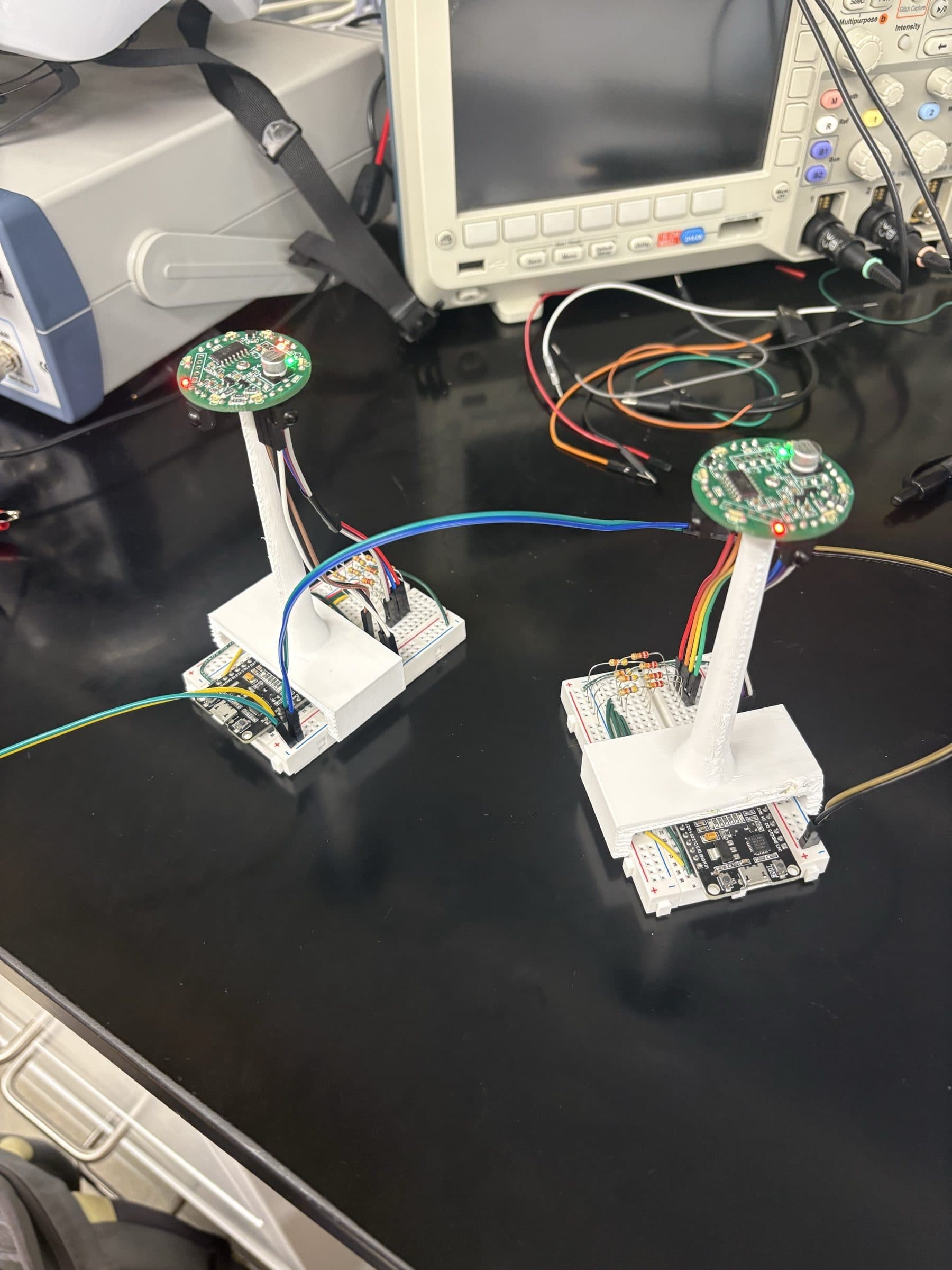
Rapid-prototyped infrared sensing hardware for a relative localization system on small autonomous surface vehicles. Designed 3D-printed sensor rings, tested IR sensors, calibrated magnetometers, and implemented C++ signal filtering for integration with bearing and range estimation algorithms.
- Role
- Undergraduate Researcher
- When
- May 2026 – Jul 2026
- Where
- Madison, WI
- Built with
- Embedded C++Infrared (IR)Sensor FusionRapid PrototypingSolderingESP32 MicrocontrollersSTM32
Overview
Small vehicles, working together.
For a swarm to work together, each vehicle needs to know where its neighbors are. I prototyped the infrared hardware behind that: 3D-printed sensor rings, IR sensor testing, magnetometer calibration, and C++ filtering that feeds bearing and range estimation.
Early prototyping
Testing off-the-shelf IR bearing rings.
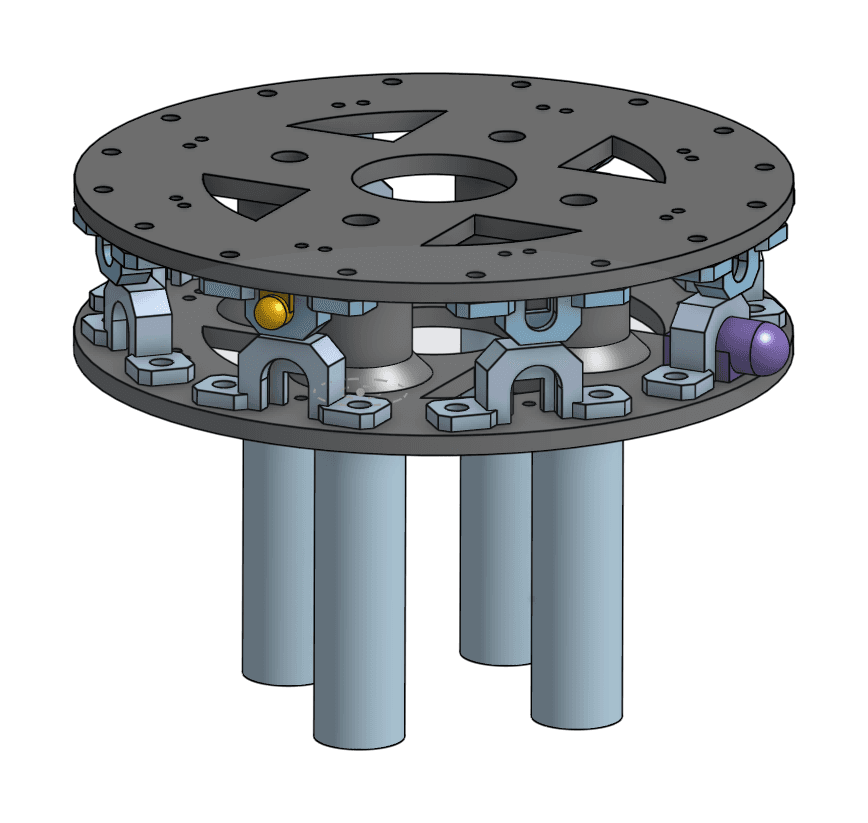
Early on, I tested a set of purchasable IR bearing rings, each driven by its own ESP32 and mounted on a 3D-printed mast, to see how well one node could pick up the direction of another.
Next
NYC FIRST STEM Center
Robotics instruction and medical crash-cart hardware.